Ridge Tiles, Flashing and What a Clean Reveals
You booked a roof clean to get rid of the moss, and that is exactly what you will get. What you might not expect is the other thing a clean can do, which is show you problems you never knew were up there.
Getting close to a roof, treating the growth and clearing it back, tends to bring small faults into view. A cracked ridge tile or a lifting bit of flashing is a lot easier to spot once the green is gone. Here is what a clean can reveal and why that is a good thing.
The quick answer: A roof clean is not a repair service, but the close look it involves often reveals early problems. Ridge tiles, flashing, mortar and slipped tiles are the usual suspects. Catching these while they are small lets you sort them before they turn into leaks and damp.
1. What ridge tiles are and why they matter
Ridge tiles are the curved or angled tiles that sit along the very top of your roof, capping the join where the two slopes meet. They take a beating from wind and weather because they sit at the most exposed line of the whole roof.
Traditionally they are bedded on mortar, and that mortar does not last forever. Over the years it cracks, crumbles and works loose, especially on older homes across the South East that have weathered decades of damp and frost.
When a ridge tile loosens, it becomes both a leak risk and a safety worry, since a dislodged ridge tile can eventually come down. Spotting a loose one early is far better than finding it in the garden after a storm.
2. Flashing and the joins it protects
Flashing is the material, often lead, that seals the joins where your roof meets something else. Think of a chimney, a wall, a valley between two slopes, or the edge of an extension. Those joins are where roofs most often leak, and flashing is what keeps them watertight.
Flashing can lift at the edges, crack, or pull away from the mortar joint it tucks into. From the ground you would never see it. Up close during a clean, a lifting strip of lead or a gap around the chimney becomes obvious.
Because so many leaks start at these joins rather than in the middle of the tiles, keeping an eye on flashing matters more than people realise. It is small, it is easy to miss, and it does a big job.
3. Mortar, bedding and pointing
Mortar shows up in more places than just the ridge. It beds tiles at the edges, points around chimneys, and fills gaps that would otherwise let weather in. Like all mortar, it ages, and aged mortar cracks and falls out.
Once mortar starts failing, tiles can shift and water finds new ways in. It is a slow process, which is exactly why it goes unnoticed. Nothing dramatic happens for years, and then a damp patch appears seemingly out of nowhere.
A clean brings this into focus. With the moss and grime treated, worn pointing and crumbling bedding are easier to see, so you learn about it while it is still a small, cheap fix.
4. Slipped and cracked tiles
Tiles slip. Fixings corrode, the odd tile cracks, and wind lifts others out of line. A single slipped tile leaves a gap, and a gap lets water into the roof space where it can quietly cause damp and rot.
Moss makes slipped tiles harder to spot, because a green blanket hides the neat lines of the roof. Clear that growth and the tile pattern stands out, so a tile that has dropped or turned shows up plainly.
Finding a slipped tile early usually means a simple repair. Finding it after months of water getting in means dealing with the damage inside as well, which is a much bigger job.
- Ridge tiles: the capping tiles along the top, prone to loose or cracked mortar bedding.
- Flashing: the seals at chimneys, walls and valleys, where lifting or cracking causes many leaks.
- Mortar and pointing: ageing bedding and pointing that crumbles and lets tiles shift.
- Slipped tiles: tiles knocked or dropped out of line, leaving gaps for water to get in.
- Early warning: spotting any of these during a clean means a small fix instead of a big one.
5. Why a clean is the ideal moment to look
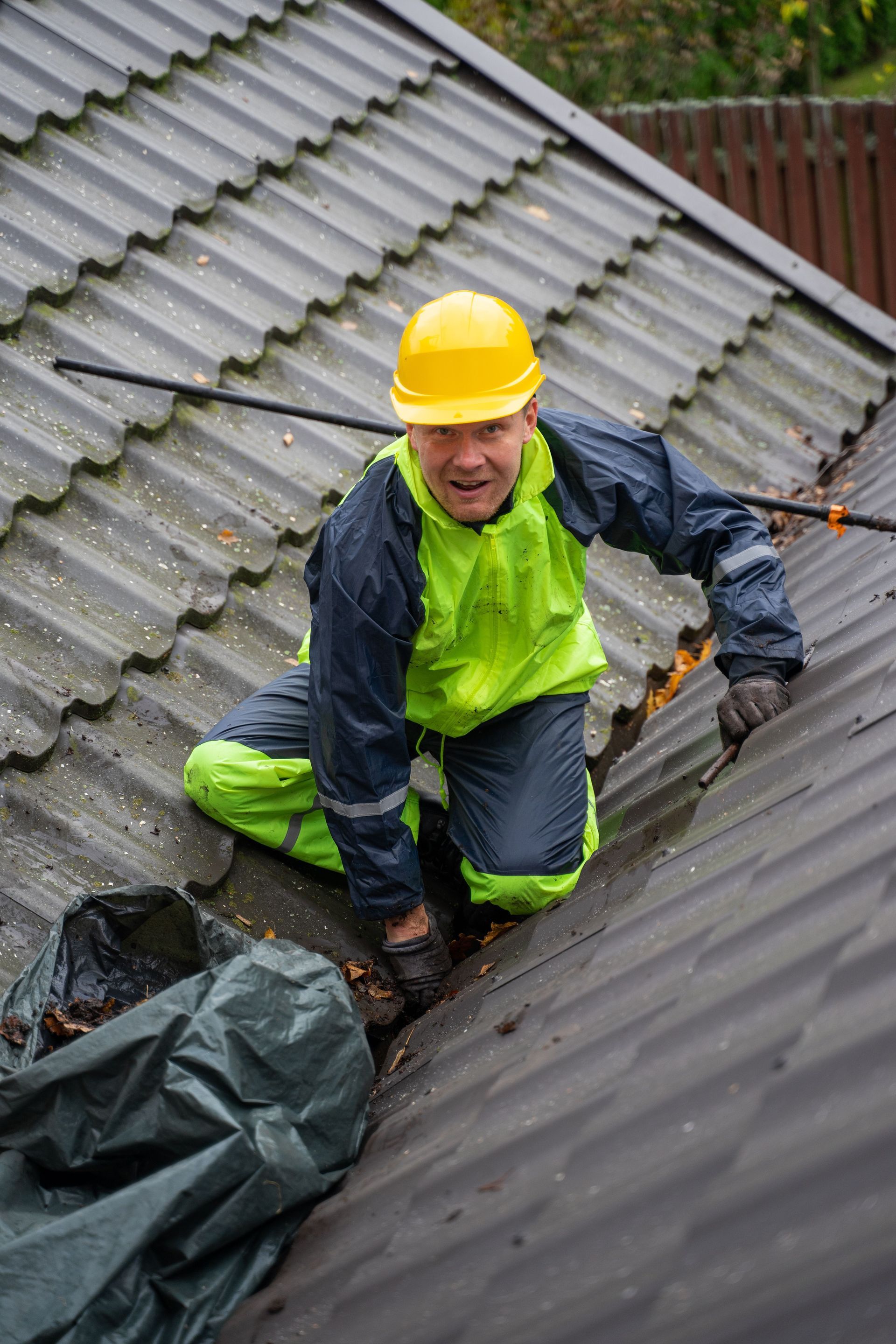
You do not climb up to inspect your roof on a normal day, and you should not. That is what makes a roof clean such a useful moment. The access is already sorted, the growth is being treated, and the roof is being seen up close by someone who knows what to look for.
It is a natural check-up that comes bundled with the cleaning. Nobody is pulling the roof apart, but a trained eye passing over every part of it tends to catch the things a homeowner never could from the drive.
Ben's Roof Cleaning does roof cleaning, moss removal and gutter clearing, not roof repairs. But if something is spotted while cleaning, you will be told, so you can arrange the right repair with your eyes open.

6. Turning what you learn into a plan
Finding a small fault is not bad news, it is useful news. It hands you the chance to plan a repair on your own timeline, get a proper price, and sort it before winter weather makes it worse.
Left unseen, these same small faults are the ones that cause leaks, ruined ceilings and damp walls down the line. The gap between a quick fix and a major job is often just how early you knew about it.
So think of the clean as two things at once. You get a fresh, moss-free roof, and you get a heads-up on anything that needs attention before it becomes a real problem. That is a good deal for one visit.
Frequently Asked Questions
Does a roof clean include repairs?
No. Ben's Roof Cleaning covers roof cleaning, moss removal and gutter clearing, not repairs. But if a problem is spotted during the clean, you will be told so you can arrange the right fix.
Why are ridge tiles a common problem?
They sit at the most exposed line of the roof and are bedded on mortar that cracks and loosens over the years. A loose ridge tile is both a leak risk and a safety worry.
What is flashing and why does it matter?
Flashing seals the joins where the roof meets a chimney, wall or valley. Many leaks start at these joins, so lifting or cracked flashing is worth catching early.
How does cleaning help me spot slipped tiles?
Moss hides the neat lines of a roof. Once the growth is treated and cleared, the tile pattern stands out, so a slipped or cracked tile becomes much easier to see.
Should I worry if you find something?
Not at all. Finding a small fault early is good news, since it lets you plan a simple repair before it grows into a leak or damp problem that costs far more.
Want a clean roof and a proper look at its condition?
Ben's Roof Cleaning cleans roofs, removes moss and clears gutters across London and the South East, with over 15 years of experience. Get in touch or call 01342 778892
for a free, no-obligation quote.
A clean roof also shows you what to fix next
Cleaning your roof does more than clear the moss. It gets a knowing eye up close to the ridge tiles, flashing, mortar and every line of tiles, which is exactly where small faults hide. Catch them early and they stay small and cheap. That extra insight is one of the quiet benefits of doing the job properly.